

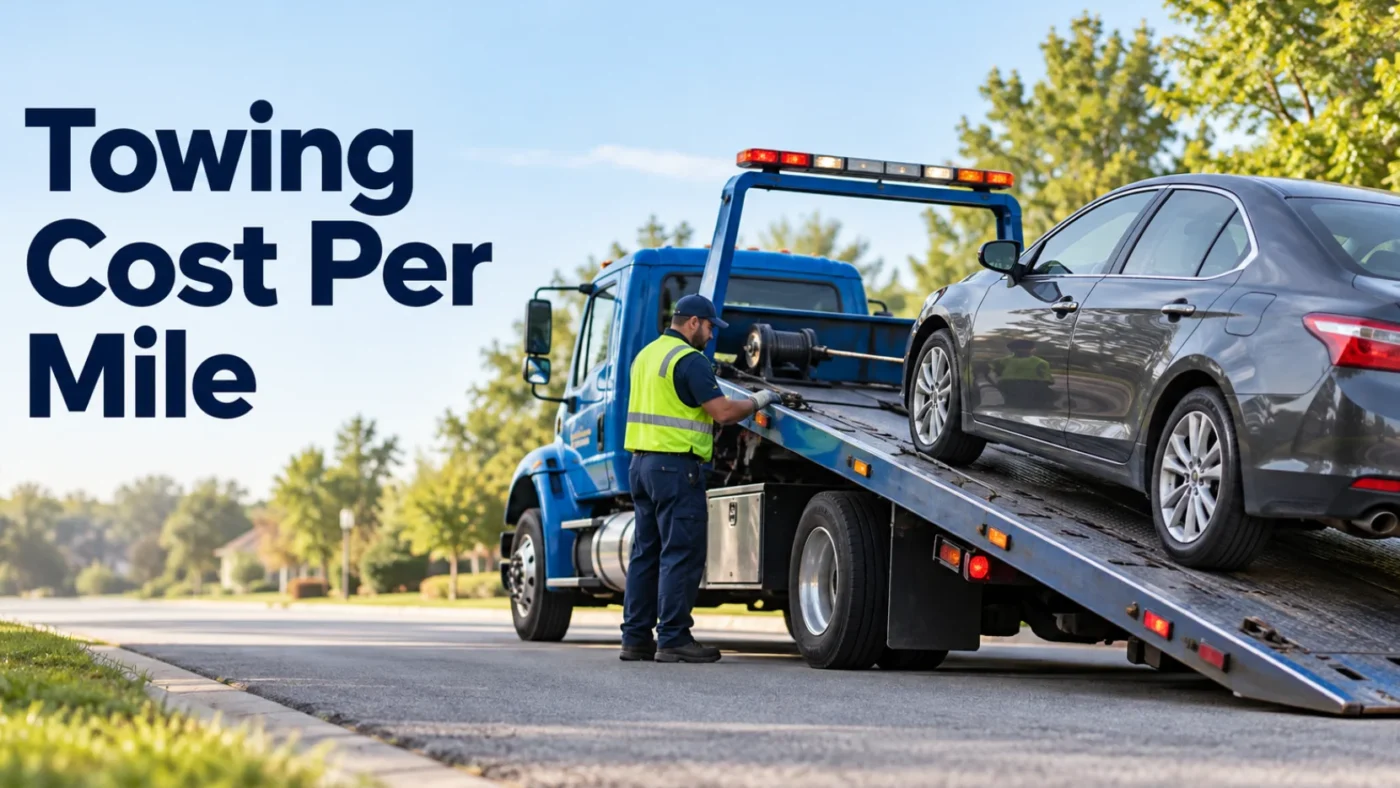
A towing cost per mile quote usually covers only part of your final bill. Most U.S. towing companies also charge a hookup, dispatch, or minimum service fee. For a light-duty vehicle, mileage commonly runs about $2.50 to $7 per mile before extra charges.
Your final price depends on distance, vehicle type, location, and the equipment needed. Night service, accident recovery, winching, storage, and flatbed use may increase the total. Asking for a full price before dispatch can help you avoid an unexpected bill.
Towing Prices at a Glance
| Cost item | Typical U.S. range or example |
|---|---|
| Light-duty mileage | About $2.50–$7 per mile |
| Common hookup or base fee | About $50–$125 |
| Short local tow | Often around $75–$200 |
| Longer 50-mile tow | Often around $200–$400 |
| Winching or recovery | Usually charged separately |
| Storage | May be charged daily |
| After-hours service | May cost more depending on the provider |
These figures are general market ranges rather than regulated national prices. Local laws and individual companies can charge more or less. Always request a written or texted estimate when possible.
Quick answer: A standard U.S. tow commonly costs about $2.50 to $7 per mile, plus a hookup or base charge. A short tow may cost under $150, while longer trips can reach several hundred dollars. Vehicle size, location, flatbed needs, recovery work, and after-hours service can raise the bill.
How Towing Companies Calculate Your Bill
Most operators use two main pricing components. The first is a fixed charge to send the truck and hook up your vehicle. The second is a mileage charge based on how far the vehicle gets transported. A company might quote a $75 hookup fee plus $4 for each loaded mile. A 10-mile tow would then cost about $115 before taxes or additional services.
Some operators include the first few miles inside their minimum charge. The definition of billable mileage also matters. Some companies charge only for miles traveled while your vehicle is attached. Others may use minimum distances or different pricing structures for remote pickups.
Before agreeing to service, ask how mileage starts and stops. Ask whether the first few miles are included in the base price. These questions make it easier to compare competing quotes.
Average Towing Cost Per Mile in the U.S.
No single national towing cost per mile applies to every company. Recent U.S. consumer guides commonly place light-duty mileage between roughly $2.50 and $7. The Zebra reports an average figure of about $4.75 per mile within that broader range.
HomeGuide gives a narrower common estimate for many long-distance jobs. Its pricing guide lists about $2 to $4 per additional mile after a base charge. These differences show why one national number can be misleading. Urban areas with many towing companies may offer more competitive pricing.
Rural areas can cost more because trucks travel farther to reach stranded drivers. Limited local availability can also increase dispatch charges. Long trips sometimes receive a lower effective mileage rate. A company may offer a negotiated flat price instead of applying its normal local rate. Ask for both options before arranging a long-distance tow.
Example Tow Costs by Distance
The examples below use a hypothetical $75 hookup charge and $4 per loaded mile. They show how quickly distance changes the total. Your actual quote may differ because local rates and services vary.
| Two distances | Hookup fee | Mileage charge | Estimated total |
|---|---|---|---|
| 5 miles | $75 | $20 | $95 |
| 10 miles | $75 | $40 | $115 |
| 20 miles | $75 | $80 | $155 |
| 50 miles | $75 | $200 | $275 |
| 100 miles | $75 | $400 | $475 |
These examples exclude winching, storage, tolls, taxes, and after-hours charges. They also assume the company bills every loaded mile at the same rate. Real towing invoices may use minimum charges or mileage tiers instead.
For long trips, compare the tow price with other transport options. Moving a disabled vehicle over 100 miles can become expensive quickly. A fixed long-distance quote may offer better value than standard mileage pricing.
What Makes a Tow More Expensive?
Distance matters, but it is rarely the only pricing factor. Your vehicle’s condition and location can change the equipment and labor required. A simple roadside pickup usually costs less than recovering a vehicle from a ditch. Vehicle size also affects the truck needed for the job. A compact sedan often requires only standard light-duty equipment.
Large pickups, commercial vehicles, RVs, and heavily damaged vehicles may require heavier equipment. Flatbed service can also change the price. Some all-wheel-drive, electric, luxury, damaged, or low-clearance vehicles may need a flatbed for safe transport. Confirm the correct towing method using your owner’s manual or manufacturer guidance.
Timing can also affect the bill. Some companies charge more at night, on weekends, on holidays, during severe weather, or during periods of high demand. Ask about these surcharges before the truck is dispatched.
Extra Charges to Ask About Before You Book
A low-mileage quote can become expensive once additional fees are added. Get the complete pricing structure before authorizing service. Ask whether each possible charge applies to your situation.
Common additional fees may include the following.
- Hookup or dispatch charges
- Winching and recovery labor
- Flatbed service
- Dollies or special equipment
- After-hours surcharges
- Tolls
- Accident cleanup
- Storage charges
- Impound or administrative fees
- Heavy-vehicle surcharges
Storage deserves particular attention after an accident or impound. Daily fees can add up while a vehicle sits at a towing yard. Arrange pickup or insurer instructions as soon as practical. If your vehicle was damaged in a collision, the tow may become part of an insurance claim.
Autovyra’s guide to diminished value after an accident can help explain another financial issue that may follow serious vehicle damage. Keep every towing invoice and receipt for your records.
Does Car Insurance Pay for Towing?
Standard auto insurance does not automatically include every roadside tow. Many insurers sell roadside assistance as an optional policy feature. Coverage limits can include maximum mileage, service-event limits, or reimbursement caps. Review your declarations page before assuming the entire bill is covered.
Autovyra’s best-rated auto insurance guide explains why optional benefits should be compared alongside premiums and deductibles. A cheaper policy may offer weaker roadside benefits. Safe-driver discounts are separate from roadside coverage. Autovyra’s good driver insurance guide explains how insurers may reward favorable driving histories. That discount does not automatically mean towing service is included.
If a collision caused the tow, another party’s insurance may eventually reimburse eligible costs. Liability rules and claims procedures vary by state and accident circumstances. Save invoices and ask the insurer which towing expenses require documentation.
Roadside Assistance Memberships Can Change the Math
A roadside assistance plan may include towing for a set distance. You could pay nothing at the scene when the trip stays within the plan’s limit. Longer trips may require payment for miles beyond the included allowance. Membership coverage works best when you understand its restrictions before a breakdown.
Check the included towing distance, service-call limits, and vehicle eligibility. Also confirm whether reimbursement requires using a participating provider. Insurance-based roadside coverage can work differently from an independent membership. One may dispatch a provider directly, while another may reimburse you later. Compare the process and the price.
Do not buy roadside coverage only because of one advertised towing benefit. Compare its annual cost against how often you expect to use roadside services. Battery jumps, lockouts, tire service, and fuel delivery may also add value.
How to Get a Fair Tow Quote
The easiest way to control the bill is to ask specific questions before dispatch. A rushed conversation can leave important fees unclear. Take a minute to ask for the full pricing breakdown.
Ask the towing company:
- What is the hookup or dispatch fee?
- What is the mileage rate?
- How many miles are included in the base charge?
- Do you bill loaded miles only?
- Is there an after-hours surcharge?
- Does my vehicle require a flatbed?
- Are winching or equipment fees expected?
- What is the estimated total to my destination?
Write down the company name and quoted amount. Ask whether the price can be sent by text or email. A written estimate gives you something concrete to compare with the final invoice. For non-emergency situations, call multiple providers. Price differences can be meaningful even within the same city. Compare the complete estimate rather than the advertised mileage rate alone.
Local Tows Versus Long-Distance Tows
Short tows often have a high effective per-mile price. The base fee gets spread across only a few miles. A $100 five-mile tow effectively costs $20 per mile. Longer tows work differently because fixed dispatch costs are spread across more distance. Some providers reduce the mileage rate for long trips. Others provide a single flat quote for the entire route.
This is why comparing mileage rates without the base charge can be misleading. A company with a lower mileage rate could still cost more after its minimum fee. Calculate the full trip cost before selecting a provider. For trips approaching 100 miles or more, ask whether vehicle transport is another option.
Towing remains useful when you need immediate delivery. Scheduled transport may be worth comparing when the vehicle doesn’t need to move urgently.
How to Reduce Your Towing Bill
Start by checking roadside benefits you already have. Your insurer, vehicle manufacturer, credit card, or membership program may provide eligible roadside services. Confirm the rules before ordering a separate tow. When practical, choose the nearest suitable repair facility. Each unnecessary mile increases the bill when mileage pricing applies.
Confirm that the shop can accept your vehicle before sending the truck. Ask whether a flat long-distance price is available. Negotiated pricing can sometimes beat a standard mileage calculation. Make sure the quote includes the base fee and expected surcharges.
Avoid unnecessary storage whenever possible. A vehicle left at a tow yard can collect daily fees. Coordinate promptly with your repair shop, insurer, or property owner.
When You Should Not Choose the Cheapest Tow
Price matters, but vehicle safety matters too. A provider should use equipment suitable for your drivetrain, weight, clearance, and condition. Improper towing can cause expensive damage. Ask what type of truck will arrive. Tell the dispatcher whether the vehicle is all-wheel drive, electric, heavily damaged, or unusually low. Mention blocked wheels, missing tires, or difficult access.
Drivers who perform their own maintenance should also use correctly rated equipment. Autovyra’s car ramps safety guide covers load ratings, clearance, and safe support practices. Home repair equipment should never replace proper towing when a disabled car must be moved on public roads.
A reputable provider should explain the expected method and pricing. Avoid agreeing to vague estimates that omit basic fees. Clear information before dispatch reduces disputes later.
Frequently Asked Questions
What is the average towing cost per mile?
A typical towing cost per mile for a light-duty vehicle is roughly $2.50 to $7 in many current U.S. guides. A hookup or minimum service fee usually applies in addition. Location, distance, vehicle type, and timing can change the price.
How much does a 10-mile tow cost?
A 10-mile tow typically costs $100 to $160 for a standard passenger vehicle. The final amount depends on the base fee and local mileage rate. Recovery work or after-hours service can push the total higher.
How much does a 50-mile tow cost?
Recent industry guides often place a 50-mile tow around $200 to $400. Some companies offer lower effective rates for longer trips. Ask whether a flat long-distance quote is available.
Is towing cheaper per mile over a long distance?
It can be. Some providers discount longer trips or offer fixed pricing because one long job can be efficient for the operator. The hookup charge also spreads out over more miles.
Do tow trucks charge for the distance they drive to reach me?
Policies differ by company. Many consumer quotes focus on loaded mileage from pickup to destination. Remote dispatch or minimum charges may still reflect the distance required to reach you.
Does roadside assistance cover towing?
It often can, but limits vary widely. Coverage may include a fixed number of miles or reimbursement up to a stated amount. Check your insurer or membership terms before relying on it.
Do electric vehicles cost more to tow?
Not automatically, but some EVs require specific towing procedures. A flatbed may be recommended or required for certain models. Always follow the vehicle manufacturer’s towing instructions.
The Bottom Line
A realistic U.S. tow estimate requires more than multiplying miles by one rate. Towing cost per mile commonly runs around $2.50 to $7, while a separate hookup fee often adds $50 to $125. Additional equipment, recovery work, storage, and timing can increase the final charge.
Ask for the base fee, mileage rate, included miles, and expected surcharges before dispatch. Compare complete quotes whenever the situation allows. Check your insurance or roadside plan before paying entirely out of pocket.
Knowing the pricing structure gives you more control during an already stressful breakdown. Keep the written quote and final receipt after the job. Those records can also help if you need reimbursement through an insurer or roadside program.