
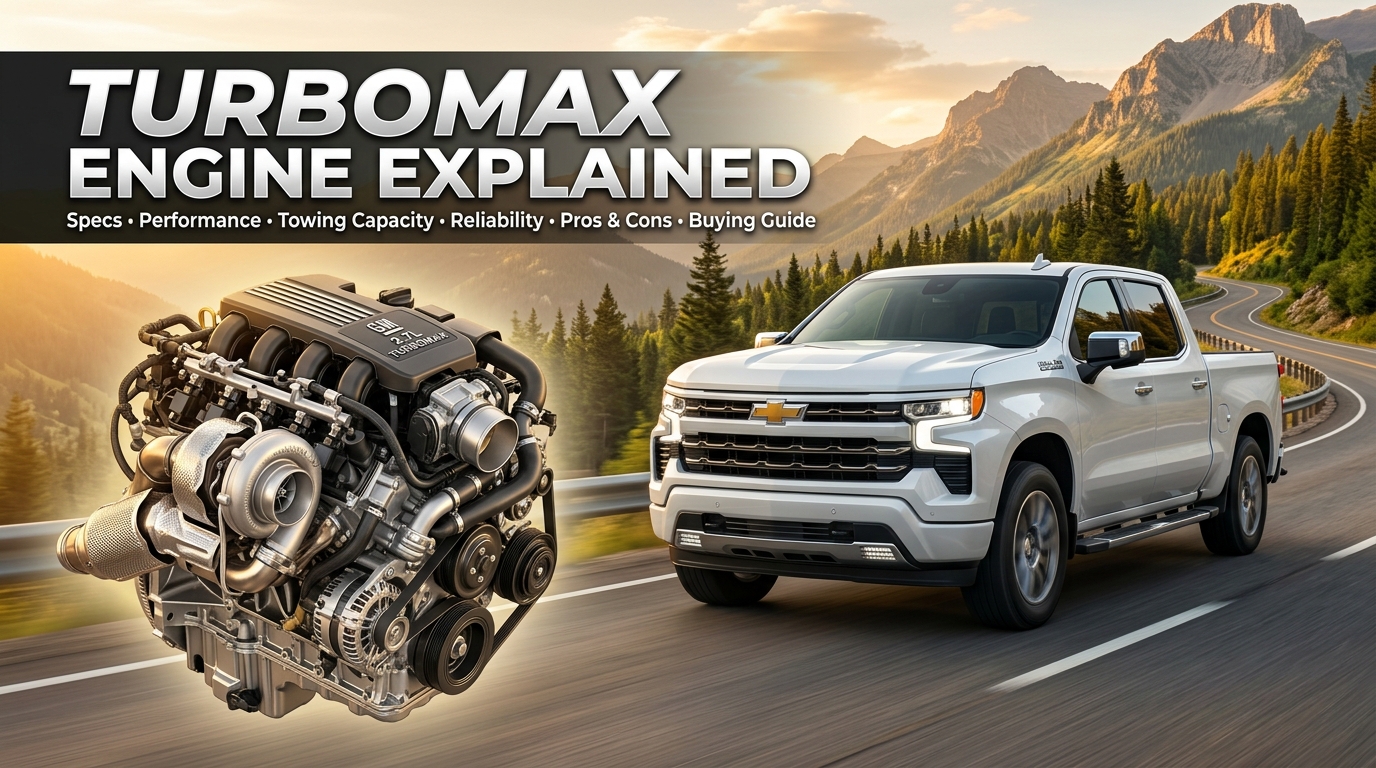
The TurboMax engine is General Motors’ 2.7-liter turbocharged four-cylinder gasoline engine for selected Chevrolet and GMC trucks. It produces 310 horsepower and 430 lb-ft of torque in current applications. Its high low-speed torque makes it suitable for daily driving, hauling, moderate towing, and light commercial work.
| Key detail | Current specification |
| Engine layout | 2.7-liter turbocharged inline-four |
| Fuel type | Gasoline |
| Maximum output | 310 horsepower |
| Maximum torque | 430 lb-ft |
| Transmission | Eight-speed automatic |
| Current applications | Chevrolet Colorado, Chevrolet Silverado 1500, GMC Canyon and GMC Sierra 1500 |
| Maximum advertised towing | Up to 9,400 pounds in the 2026 GMC Sierra 1500 |
| Main advantage | Strong standard torque from a smaller engine |
| Main drawback | Lower maximum towing capacity than some V8 and diesel options |
Official 2026 specifications show that the engine delivers more torque than Chevrolet’s available 5.3-liter V8, even though the V8 produces more horsepower. Towing capacity still depends on the truck, drivetrain, axle ratio, cab style, equipment, payload, and trailering package. Buyers should always check the rating for the exact vehicle rather than relying on the engine’s highest advertised figure.
What Is The Turbomax Engine?
TurboMax engine is the marketing name used for the high-output version of GM’s 2.7-liter L3B turbocharged gasoline engine. It uses an inline-four-cylinder layout rather than the V6 or V8 configuration traditionally associated with pickup trucks.
The engine is designed to make useful torque at relatively low engine speeds. Current GMC configuration information lists its peak 430 lb-ft at 3,000 rpm. That output supports quick acceleration and steady pulling power without requiring a large-displacement engine.
GM pairs the unit with an eight-speed automatic transmission in current Chevrolet and GMC pickups. Depending on the model, it may also include fuel-saving technology such as automatic stop/start and Active Fuel Management.
You can find more truck ownership information in Autovyra’s automobile guides.
TurboMax Engine Specifications
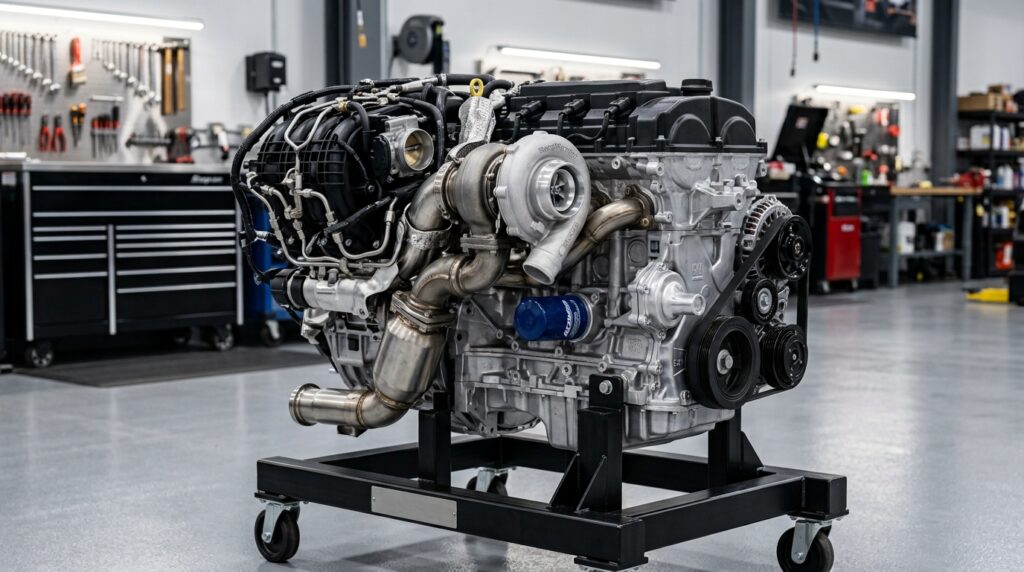
The main specifications are straightforward:
- 2.7-liter displacement
- Four cylinders in an inline arrangement
- Turbocharged gasoline induction
- 310 horsepower
- 430 lb-ft of torque
- Eight-speed automatic transmission
- Direct fuel injection
- Variable valve timing
- Aluminum engine block and cylinder head
The combination of turbocharging and a long piston stroke helps the engine produce substantial torque. A dual-volute turbocharger separates exhaust pulses more effectively than a basic single-scroll design. This can improve turbo response and reduce the delay between pressing the accelerator and receiving boost. The engine also uses a forged steel crankshaft. That component must withstand high combustion pressure because turbocharging forces more air into each cylinder.
Which Trucks Use It?
Current versions appear in several Chevrolet and GMC pickup lines.
Chevrolet Colorado
The 2026 Chevrolet Colorado uses the 2.7-liter unit across its trim range. Chevrolet lists 310 horsepower and 430 lb-ft of torque for the WT, Custom, LT, Trail Boss, Z71, and ZR2 models.
Properly equipped Colorado models can tow up to 7,700 pounds. Off-road versions may have lower ratings because suspension, tires, weight, and equipment change the vehicle’s capacity.
Chevrolet Silverado 1500
The engine is standard on several 2026 Silverado 1500 trims, including the WT, Custom, Custom Trail Boss, LT, RST, and LT Trail Boss.
Chevrolet lists 310 horsepower and 430 lb-ft of torque. Buyers who need greater maximum trailering capacity can select the available 5.3-liter V8, 6.2-liter V8, or 3.0-liter Duramax diesel, depending on the trim.
GMC Canyon
Every current GMC Canyon uses a turbocharged 2.7-liter gasoline engine. GMC lists 310 horsepower, 430 lb-ft of torque, and maximum towing of up to 7,700 pounds when properly equipped.
GMC Sierra 1500
The Sierra 1500 offers this powertrain as its standard engine on several lower and midlevel trims. GMC advertises towing of up to 9,400 pounds in the 2026 Sierra when the truck has the necessary configuration and equipment.
How Does It Compare With a V8 or Diesel?
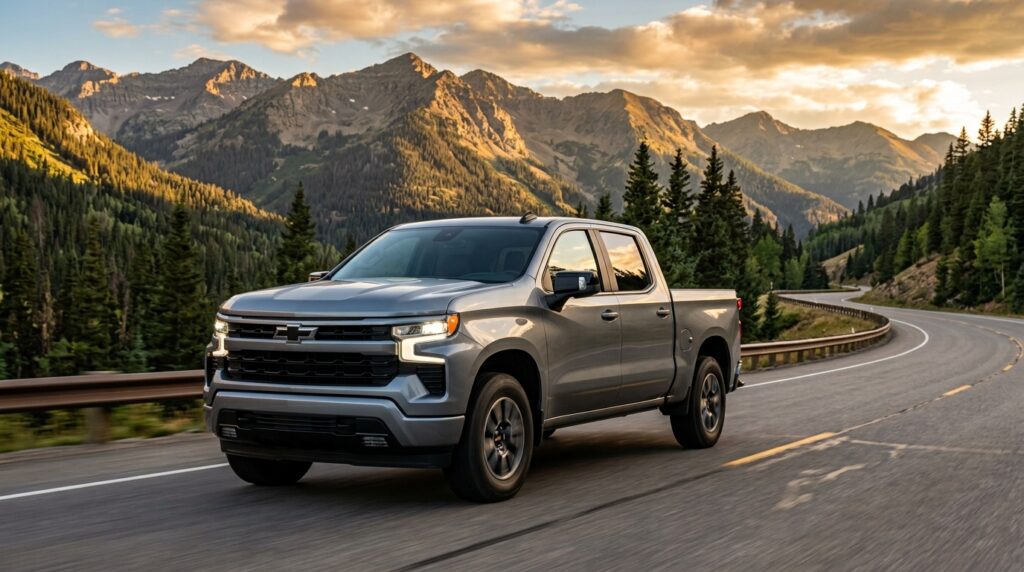
A smaller turbocharged engine can provide strong torque, but it doesn’t replace every benefit of a V8 or diesel.
| Engine | Horsepower | Torque | Main strength | Common trade-off |
| 2.7L turbo four-cylinder | 310 hp | 430 lb-ft | Strong standard torque and lower entry price | Less maximum towing capacity |
| 5.3L Chevrolet V8 | 355 hp | 383 lb-ft | Traditional V8 feel and broader availability | Lower rated torque |
| 6.2L Chevrolet V8 | 420 hp | 460 lb-ft | Strong acceleration and towing performance | Higher purchase and fuel costs |
| 3.0L Duramax diesel | 305 hp | 495 lb-ft | High towing capacity and highway efficiency | Higher initial cost and diesel maintenance |
The TurboMax engine four-cylinder is a sensible choice for commuting, job-site travel, hauling supplies, and occasional trailer use. It also offers enough torque for many recreational towing needs.
A V8 may suit drivers who value engine sound, sustained high-load performance, or higher towing ratings. The diesel makes more sense for frequent highway towing, provided its higher purchase price and maintenance requirements fit the budget.
Verdict: Choose the 2.7-liter option when you want strong everyday torque without paying for the largest engine. Choose a V8 or diesel when maximum towing is a regular requirement rather than an occasional task. Read about the Mercedes-Benz SL550 on our autovyra website.
Towing And Payload Considerations
The engine’s torque figure does not determine towing capacity by itself. A truck’s certified limit also depends on:
- Cab and bed configuration
- Two-wheel or four-wheel drive
- Axle ratio
- Cooling equipment
- Hitch equipment
- Suspension setup
- Vehicle payload
- Passenger and cargo weight
- Factory trailering packages
A 2026 Sierra 1500 can reach an advertised maximum of 9,400 pounds with this engine. As a TurboMax engine, the current GMC Canyon reaches up to 7,700 pounds. Chevrolet lists the same 7,700-pound maximum for properly equipped Colorado models. These figures are not interchangeable.
Two trucks with the same powertrain may have different ratings because of trim weight or equipment. Before attaching a trailer, check the certification labels, owner’s manual, gross combined weight rating, tongue-weight limit, and maximum payload. Cargo and passengers reduce the payload available for trailer tongue weight.
Fuel Economy And Real-World Use
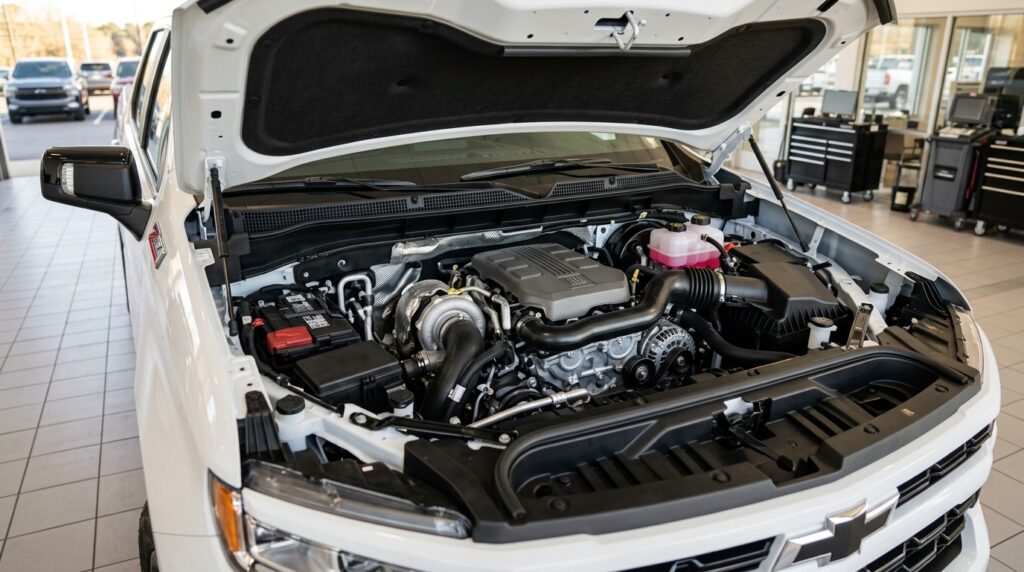
Fuel economy varies by model in the TurboMax engine, drivetrain, tires, weather, speed, load, and driving style. A turbocharged engine may save fuel during light-load driving, but fuel use rises when boost is frequently required.
Drivers are more likely to see reasonable consumption when they:
- Maintain steady highway speeds
- Avoid unnecessary idling
- Keep tires at the correct pressure
- Remove unused cargo
- Use the specified engine oil
- Follow the factory maintenance schedule
- Avoid aggressive acceleration
Towing close to the vehicle’s limit can reduce fuel economy sharply. This applies to gasoline V8s and diesel engines as well, though the amount varies.
Reliability And Expected Lifespan
There is no single guaranteed lifespan for any modern engine. Longevity depends on service history, operating conditions, oil quality, warm-up habits, towing frequency, and repair timing.
The L3B engine has been used in GM vehicles since the 2019 model year, although output and branding have changed. That history provides more real-world information than a newly introduced powertrain would have.
Its design includes several components intended for demanding operation, including a forged steel crankshaft and a rigid engine structure. Turbocharging, direct injection, variable valve systems, and cylinder-management technology also add complexity. Prospective buyers should not judge reliability from one owner report. A better assessment includes:
- Complete maintenance records
- Correct oil-change intervals
- Outstanding recalls or service campaigns
- Cold-start noise
- Turbocharger operation
- Cooling-system condition
- Diagnostic trouble codes
- Transmission shift quality
- Evidence of heavy towing or fleet use
A pre-purchase inspection is especially valuable for a used truck. Ask the technician to scan all control modules rather than checking only for an illuminated warning light.
Maintenance Requirements
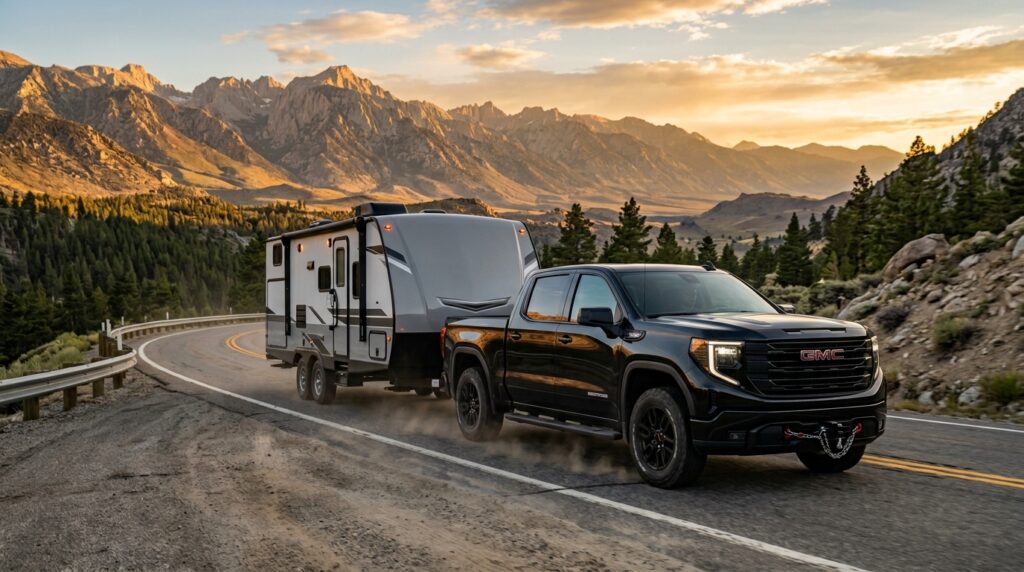
Use the oil viscosity and specification listed in the owner’s manual. Turbocharger bearings rely on clean oil, so delayed oil changes may increase wear. Drivers who tow, idle for long periods, make repeated short trips, or work in dusty conditions may fall under a severe-duty service schedule.
Key maintenance items include:
- Check the engine oil level between scheduled services.
- Replace the oil and filter at the recommended interval.
- Inspect the engine air filter and intake system.
- Keep the cooling system in good condition.
- Replace spark plugs at the specified mileage.
- Address warning lights or misfires promptly.
- Inspect hoses and connections for oil or coolant leaks.
- Follow transmission and differential service requirements.
After hard towing or a steep climb, avoid shutting the engine off the instant the truck stops unless the owner’s manual says otherwise. A brief period of lighter driving allows engine and turbo temperatures to stabilize.
Owners who maintain vehicles at home may also find Autovyra’s garage management advice useful for organizing tools, fluids, and service records.
Common Advantages And Drawbacks
Advantages
- High torque for a four-cylinder gasoline engine
- Strong low-speed acceleration
- Standard equipment on many truck trims
- Lower entry cost than some optional engines
- Suitable for moderate towing and hauling
- Smaller displacement than traditional truck V8s
Drawbacks
- Lower maximum towing capacity than certain V8 and diesel configurations
- More mechanical complexity than a basic naturally aspirated engine
- Fuel economy can fall during heavy boost or towing
- Some buyers may prefer a V8’s sound and power delivery
- Long-term repair costs can depend on turbocharger and fuel-system condition
Who Should Buy One?
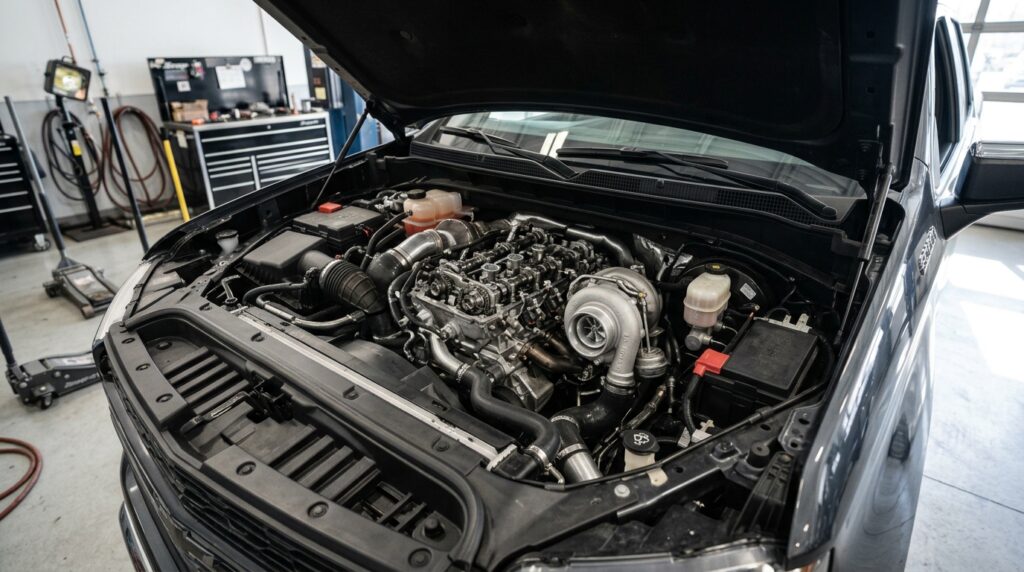
This TurboMax engine fits drivers who use a pickup for mixed duties. That may include commuting, home projects, outdoor recreation, equipment transport, or occasional trailer use.
It is a strong match when:
- Your trailer remains within the truck’s certified rating
- You want useful torque without upgrading to the largest engine
- Most trips involve light or moderate loads
- Purchase price matters
- You prefer gasoline over diesel
Consider another engine when you regularly tow near the maximum rating, carry heavy payloads every day, or need the highest available trailering capacity. In those cases, extra engine capacity and a higher-rated truck configuration may provide a better margin.
Final Takeaway
GM’s 2.7-liter turbocharged four-cylinder, TurboMax engine, offers a practical balance of output, price, and everyday capability. Its 430 lb-ft torque rating is the key attraction, particularly for drivers who want responsive performance without selecting a larger engine.
The right decision still depends on the complete truck configuration. Compare payload and towing labels, not horsepower alone. For more vehicle comparisons and ownership advice, visit Autovyra’s automotive information section.
Frequently Asked Questions
Yes. It is a 2.7-liter turbocharged inline-four gasoline engine. Current Chevrolet and GMC truck applications produce 310 horsepower and 430 lb-ft of torque.
No. TurboMax is a gasoline engine. Duramax is GM’s diesel-engine brand. The current 3.0-liter Duramax available in the Silverado and Sierra produces more torque and supports higher maximum towing ratings.
It can tow many travel trailers when the truck and trailer remain within their respective ratings. Check loaded trailer weight, tongue weight, payload, hitch capacity, and gross combined weight before towing.
Fuel requirements can vary by model year and application. Follow the fuel recommendation printed in the owner’s manual and inside the fuel door. Using a higher octane than required does not automatically increase towing capacity.
It can be suitable for many buyers. Its 430 lb-ft torque rating supports normal hauling and moderate towing. Drivers who frequently tow heavy loads may be better served by a higher-capacity V8 or diesel configuration.
Review service records, scan for stored fault codes, inspect for leaks, listen during a cold start, test the transmission, and confirm that all recall work has been completed. A professional inspection can identify concerns that a short test drive may miss.