
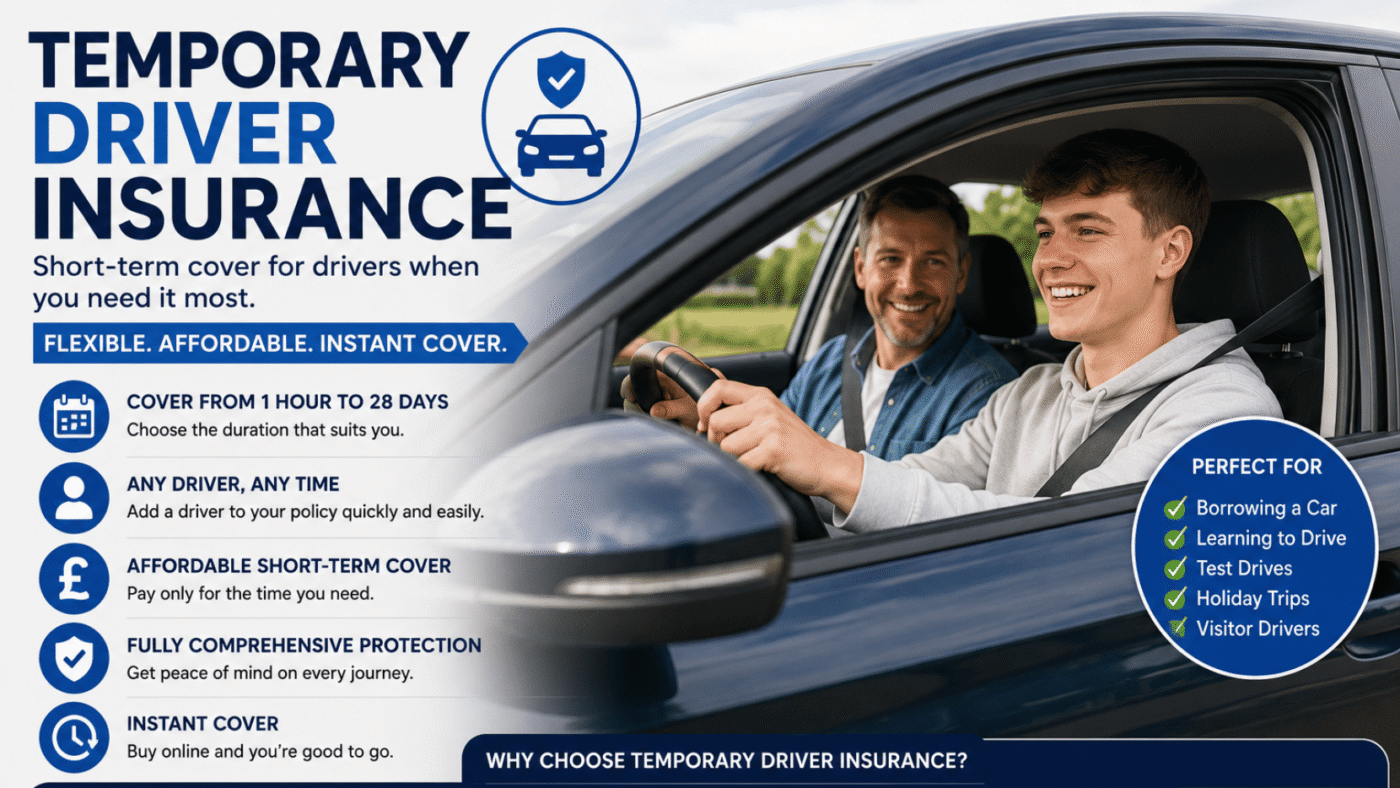
Temporary driver insurance can cover someone who needs to drive a car for a limited period, often from a few hours to several weeks. Depending on the insurer, you may buy a separate short-term policy or add the person to the vehicle owner’s existing policy. The right option depends on how long the person will drive, the vehicle involved, the required cover, and the effect a claim could have on the owner’s policy.
| Key question | Quick answer |
| What is it? | Short-term insurance for a person driving a specific vehicle |
| Typical duration | From one hour to around 28 or 30 days, depending on the provider |
| Common uses | Borrowing a car, sharing a journey, test drives and emergency travel |
| Main options | Standalone short-term cover or a temporary named-driver change |
| Is permission enough? | No. The person must also be properly insured |
| Does it protect the owner’s no-claims discount? | A standalone policy often does, but policy terms vary |
| Can every driver qualify? | No. Age, license, claims, convictions and vehicle rules apply |
What Is Temporary Driver Insurance?

Temporary driver insurance is short-term motor cover that allows a person to drive a particular vehicle for a defined period.
The term can describe two different arrangements:
- The driver buys a standalone short-term policy for the vehicle.
- The vehicle owner asks their annual insurer to add the person temporarily.
These arrangements may sound similar, but claims are handled differently. A claim on a standalone policy will usually be handled under that policy. A claim involving a temporary named driver normally falls under the owner’s annual insurance.
Before choosing, check whose policy would respond after an accident, which excess applies, and whether the vehicle owner’s no-claims discount could be affected.
When Might Short-Term Cover Make Sense?
Short-term insurance can be useful when annual cover would be unnecessary or inflexible.
Common situations include:
- Borrowing a friend’s or relative’s car for a weekend
- Sharing the driving during a long journey
- Using another car while yours is being repaired
- Test-driving a vehicle sold privately
- Driving a recently purchased vehicle home
- Visiting family and occasionally using their car
- Covering a temporary employee or family member
- Using a vehicle for a one-off business journey, where permitted
Many UK providers offer temporary policies by the hour, day, or week. Some extend cover to around 28 or 30 days. Availability and permitted uses differ between insurers.
Autovyra readers can find related policy guidance in the site’s Auto Insurance section.
Temporary Driver Insurance Options Compared
| Option | Best suited to | Main advantage | Main drawback | Claim impact |
| Standalone temporary policy | One-off or short periods | Separate from the owner’s annual policy | Can become expensive if bought repeatedly | Usually handled under the temporary policy |
| Temporary named driver | Repeated driving over a defined period | May be convenient through the existing insurer | May change the annual premium or involve a fee | Can affect the owner’s claims record |
| Driving Other Cars cover | Rare, emergency use where confirmed | No separate purchase may be needed | Often restricted and commonly third-party only | Depends on the annual policy |
| Annual named driver | Regular use throughout the year | Better value for frequent driving | Not designed for a brief one-off need | Claims normally affect the main policy |
Standalone Short-Term Cover

A standalone policy is often the clearest choice for a one-off need. It identifies the insured person, vehicle, start time, and end time.
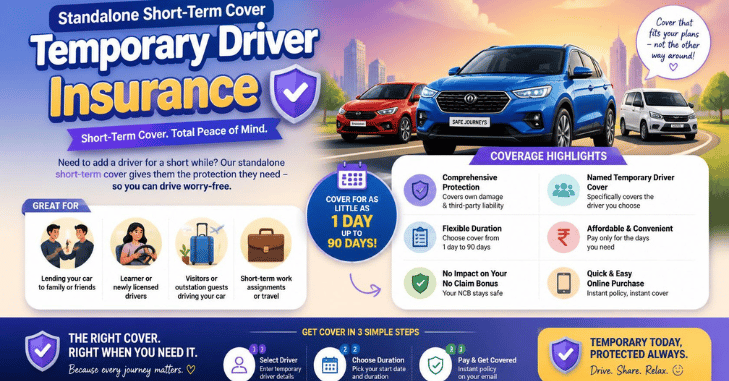
Because the cover is separate, a claim will not normally be made against the vehicle owner’s annual policy. Several providers state that this structure protects the owner’s no-claims discount, although the buyer should confirm the exact wording before purchase.
A standalone cover may suit a driver borrowing a car for a day, weekend, or short trip. It can also prevent the owner from having to alter their main insurance.
Adding a Temporary Named Driver
Some annual insurers allow the policyholder to add another person for selected dates. The insurer may adjust the premium based on that person’s age, experience, occupation, address, and driving record. This route can work well when the person will use the vehicle several times during the temporary period.
It may also be practical when the owner prefers to manage all cover through one insurer. The downside is that an accident may affect the owner’s policy, claims history, or future price. The insurer may also charge an administration fee.
Relying on Driving Other Cars’ Cover
Do not assume a comprehensive annual policy allows its holder to drive any other vehicle.
Driving Other Cars, often called DOC cover, is not included in every policy. Where it exists, it may provide third-party cover only. That means damage caused to another person or their property may be covered, while damage to the borrowed vehicle may not be.
Check the certificate and full policy wording. Confirm the vehicle, driver, purpose of travel, and level of protection before relying on DOC cover.
Our Verdict: Which Option Should You Choose?
For a brief, one-off need, a standalone short-term policy is usually the clearest option. It provides defined start and end times and is normally separate from the owner’s annual policy.
A temporary named-driver change may be better when the person will use the car repeatedly or when the annual insurer offers a competitive adjustment.
DOC cover should only be used after the driver has confirmed that it applies to the exact situation. It should not be treated as automatic comprehensive protection.
For broader ownership and driving advice, visit Autovyra’s automobile guides.
How Much Does Temporary Cover Cost?
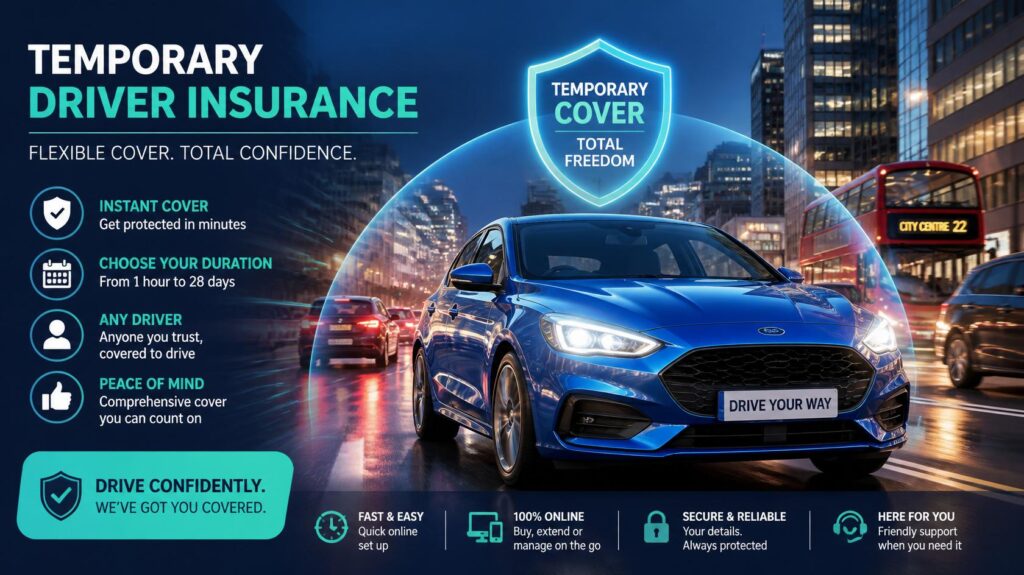
There is no standard price. Insurers calculate a quote from the risk presented by the driver, vehicle, and proposed use.
Factors can include:
- The driver’s age
- How long they have held their license
- Previous claims or convictions
- The vehicle’s make, model, value and insurance group
- The driver’s postcode
- The policy duration
- The intended use
- The chosen excess
- The requested level of protection
One current provider example showed qualifying customer prices starting at £15.72 for one hour and £23.99 for one day. Those figures applied only to a stated portion of customers during a defined period, so they should not be treated as typical market prices or guaranteed quotes.
Compare the total cost against adding a named driver. For repeated use, several temporary policies may cost more than an annual arrangement. MoneySavingExpert recommends comparing direct short-term quotes with named-driver and annual options rather than assuming one route will always be cheaper.
Seven Checks to Make Before Buying
1. Confirm the Exact Driver and Vehicle
The policy must cover the person who will drive and the specific vehicle they will use. The fact that the car already has insurance does not automatically insure another person.
2. Check the Start and End Times
Hourly policies may begin and expire at precise times. Do not estimate when the journey will finish. Allow enough time for delays, stops, and the return trip.
3. Read the Eligibility Rules
Insurers may set limits based on:
- Minimum or maximum age
- License type
- Length of driving experience
- UK residency
- Previous claims
- Penalty points
- Driving convictions
- Previous cancelled policies
- Vehicle value or modifications
Approval from one provider does not mean every insurer will accept the same risk.
4. Confirm the Level of Cover
Many temporary policies provide comprehensive protection, but this is not universal. Check the cover for accidental damage, theft, fire, third-party liability, and personal belongings. Also review exclusions for business use, deliveries, taxis, motorsports, European travel, and certain vehicle types.
5. Review the Excess
The premium is only part of the potential cost. Check the compulsory and voluntary excess that would apply after a claim.
A cheap policy with a large excess may offer poor value for a low-value vehicle or a driver who could not afford the claim contribution.
6. Check the Claim Consequences
Ask whose insurer handles a claim and whether the owner’s no-claims discount is protected. Even when a separate policy protects the owner’s discount, the temporary driver may still need to disclose the accident when applying for insurance later.
7. Save the Insurance Certificate
A new policy may not appear immediately in an online insurance-status check. The Motor Insurers’ Bureau says policy information can take several days to appear and recommends keeping the policy details available during that period. Read the certificate before driving. Check the registration, driver’s details, permitted use, and period of cover.
Why Correct Cover Matters
It is illegal in the UK to drive on a road or in a public place without at least third-party insurance. The vehicle being insured is not enough. The person driving must be correctly covered. A driver caught without valid insurance may receive a £300 fixed penalty and six penalty points.
A court can impose an unlimited fine or disqualification, and police can seize the vehicle. Permission from the owner does not replace insurance. Never take the keys until you have confirmed that the cover is active.
Mistakes to Avoid
Assuming Comprehensive Insurance Covers Every Car
“Comprehensive” refers to the protection provided by a specific policy. It does not mean the policyholder can automatically drive any vehicle.
Letting the Policy Expire During the Journey
Check the finish time rather than the date alone. Cover ending at 3 p.m. will not protect a driver who returns the car at 4 p.m.
Choosing the Wrong Use
Social use may not cover a business journey. Standard business use may not cover deliveries, courier work, or carrying passengers for payment.
Giving Inaccurate Information
Incorrect details can invalidate cover. Declare convictions, claims, vehicle modifications, and the intended use accurately.
Using a Named-Driver Arrangement for the Main Driver
The person who uses the vehicle most should be declared the main driver. Listing the true main user as a secondary driver to obtain a cheaper quote may amount to fronting, which can invalidate the policy.
Choose a cover based on the journey
Temporary Driver Insurance: Start by defining who will drive, which vehicle they will use, and how long they need it. Then compare a standalone policy with the cost of changing the owner’s annual cover. Check the excess, exclusions, and claim consequences before paying. Save the certificate and confirm the times shown on it.
Frequently Asked Questions
Yes. Many providers offer one-day policies, while some sell cover lasting from an hour to several weeks. The available duration depends on the insurer and driver’s eligibility.
You may be able to add them to your annual policy or ask them to buy separate short-term cover. Compare the price, excess, and possible effect on your claims record.
No. Permission is required, but it does not provide insurance. The person must be covered to drive that specific vehicle.
A separate policy usually keeps a claim away from the owner’s annual policy. A temporary named-driver change may not. Always check the terms.
Often, each additional person needs separate cover. Some products may have different rules, so check before buying.
Possibly. Providers apply different age and experience requirements. A recently qualified driver may face higher prices or fewer available options.
Some policies include limited European protection, while others exclude it or provide only third-party cover. Confirm the countries, dates, and cover level in writing.