
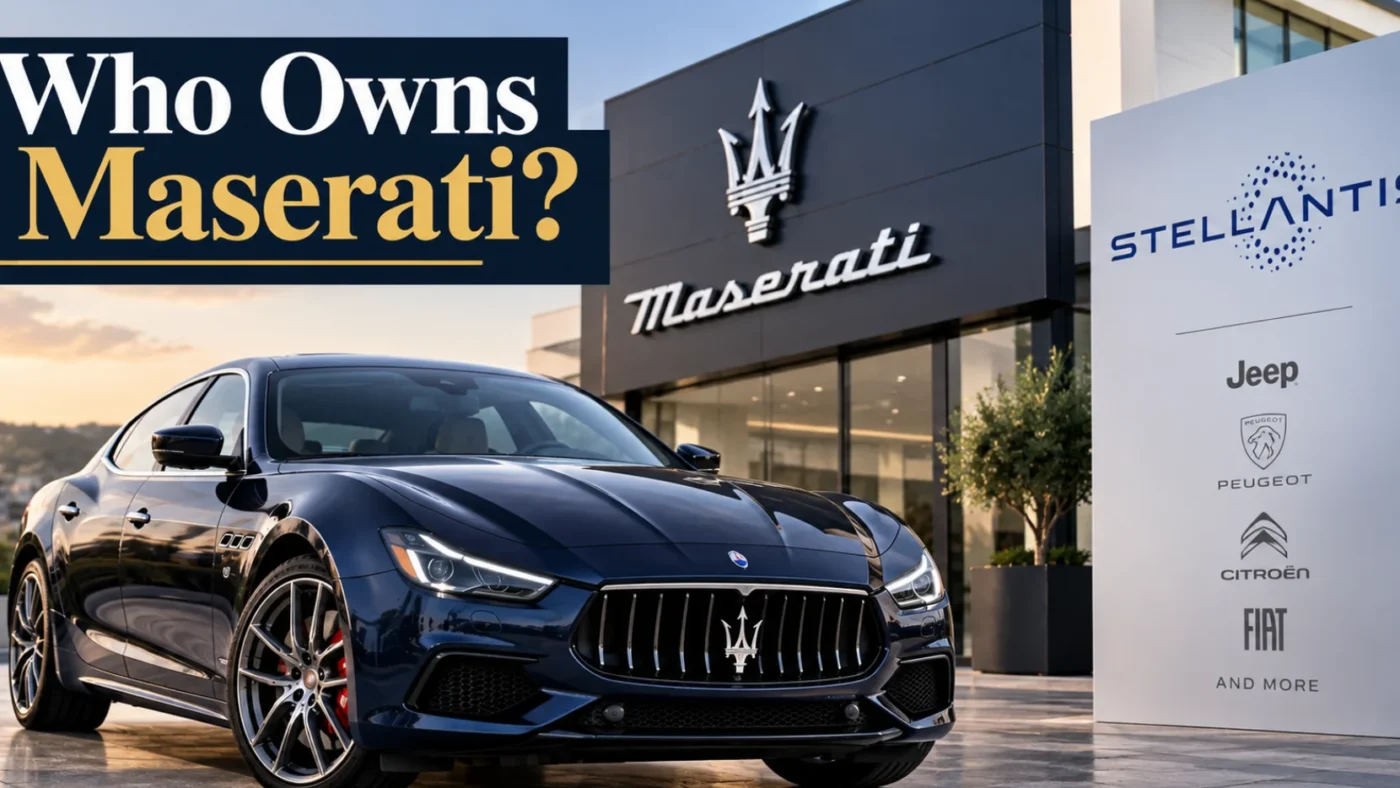
If you’re asking who owns Maserati in 2026, the answer is Stellantis N.V., the multinational automaker formed when Fiat Chrysler Automobiles and PSA Group merged in 2021. The Italian luxury marque is one of Stellantis’s brands, alongside Alfa Romeo, Jeep, Dodge, Ram, Fiat, Peugeot, and several others. Its corporate parent is international, but the Trident brand retains deep Italian roots in design, engineering, manufacturing, and headquarters operations.
Quick answer: Stellantis N.V. is the current parent company. The group was created in January 2021 by the merger of Fiat Chrysler Automobiles and PSA Group. Ferrari controlled the luxury automaker earlier in its history, but the two companies have been separate since 2005.
| Key fact | Current answer |
|---|---|
| Brand | Maserati S.p.A. |
| Current parent company | Stellantis N.V. |
| Parent company formed | 2021 |
| Previous major parent | Fiat Chrysler Automobiles |
| Ferrari connection | Controlled the brand from 1997 until the 2005 separation |
| Headquarters | Modena, Italy |
| Current corporate status | Stellantis brand |
| U.S. presence | North American sales, dealers, service, and customer support |
| Ownership changed in September 2026? | No announced sale as of September 5, 2026 |
Key Takeaways
- Stellantis is the current corporate parent.
- The 2021 FCA-PSA merger created the present ownership structure.
- Ferrari once controlled the Trident marque, but that relationship ended in 2005.
- Fiat played a central role in the company’s modern ownership history.
- Corporate ownership does not change the marque’s Italian headquarters and manufacturing identity.
- Recent partnership discussions reported in 2026 should not be confused with a completed sale.
Who Owns Maserati in 2026?
Stellantis N.V. controls the company today. Stellantis lists the marque in its official portfolio of automotive brands, and the group’s 2025 Annual Report, published in February 2026, continued to identify it as part of the company. That makes Stellantis the relevant parent when discussing corporate control, investment decisions, financial reporting, and long-term product strategy.
Maserati operates as the group’s Italian luxury-performance marque rather than as an independent publicly traded automaker. Stellantis itself is publicly traded, so investors can own shares in the parent company rather than buying shares in this individual vehicle brand. This distinction matters because a well-known badge can retain a separate identity while still belonging to a much larger automotive group.
That corporate structure is common across the auto industry. Autovyra’s GMC vs Chevy comparison shows how separate vehicle brands can share one parent while maintaining different products and market positions. A shared corporate owner does not mean every badge under that company becomes the same brand.
How Maserati’s Ownership Changed Over Time
The company began in Bologna in 1914 and grew around the founding family’s engineering and racing interests. In 1937, the Maserati brothers sold the business to industrialist Adolfo Orsi, although they continued working with the company for another decade. The headquarters later moved to Modena, which remains central to the marque’s identity today.
Ownership changed again when Citroën took control during the late 1960s. The company then passed into the De Tomaso era following the turmoil surrounding Citroën in the 1970s, before Fiat acquired the business in 1993. Those changes created a complicated ownership history that explains why drivers may associate the badge with several different automakers.
| Period | Main owner or controlling group | Why it matters |
|---|---|---|
| 1914 to 1937 | Founding family | Company established and racing identity developed |
| 1937 to late 1960s | Orsi family | Expansion and move to Modena |
| Late 1960s to 1970s | Citroën | French ownership and industrial development |
| 1970s to 1993 | De Tomaso era | Biturbo period and broader production |
| 1993 to 1997 | Fiat | Start of modern Fiat-group ownership |
| 1997 to 2005 | Ferrari control | Major product and brand redevelopment |
| 2005 to 2014 | Fiat Group | Returned to direct Fiat control |
| 2014 to 2021 | Fiat Chrysler Automobiles | Became part of FCA |
| 2021 to present | Stellantis | FCA and PSA merged to create the current parent. |
The timeline also shows why ownership questions can produce conflicting answers online. Older dealership pages and historical articles may still say FCA or Fiat because they were written before the 2021 merger. Current corporate sources are more useful when identifying the owner today.
Did Ferrari Ever Own Maserati?
Yes, Ferrari controlled Maserati during an important period of its modern history. Fiat had acquired the company in 1993, and control shifted to Ferrari in September 1997, when both companies were connected through the wider Fiat organization. That era included substantial changes to facilities, products, engineering, and the brand’s return to the United States.
The relationship did not continue indefinitely. In 2005, Fiat announced that ownership would transfer from Ferrari back to Fiat Group, although technical cooperation between the companies continued. An official Fiat announcement from February 2005 specifically described the company as wholly owned by Ferrari before that transfer.
This history explains a common misconception among enthusiasts and used-car shoppers. Ferrari-built or Ferrari-developed engines appeared in several vehicles from that era, but a historical engineering relationship is not evidence of current corporate ownership. Today, the two marques have separate corporate structures.
What Stellantis Ownership Means for Maserati Today
Stellantis controls the broader corporate framework surrounding the luxury marque, including capital allocation and group-level strategy. Maserati still has its own badge, product identity, engineering priorities, and premium positioning within that structure. Current official material continues to present the company as a distinct Italian luxury-performance brand within the Stellantis portfolio.
Shared ownership can also create access to technology, purchasing scale, platforms, or corporate resources without requiring every vehicle to become mechanically identical. The same principle appears elsewhere in the industry, including new brands backed by established manufacturers. Autovyra’s Scout Motors explainer provides another example of how a distinctive automotive badge can exist within a larger corporate structure.
For buyers, the parent company matters less than the specific vehicle’s engineering, warranty, service network, depreciation, and maintenance history. Luxury-performance vehicles can carry higher running costs regardless of which corporation owns the badge. Shoppers comparing grand-touring alternatives can also review Autovyra’s Mercedes-Benz SL550 buying guide to see how condition and maintenance affect long-term ownership.
Is Maserati Still Italian?
Yes, Maserati remains an Italian automotive brand despite having a multinational corporate parent. Its official headquarters are at Viale Ciro Menotti in Modena, Italy, and the company continues to promote Italian engineering, manufacturing, and design as core parts of its identity. The official website also states that Stellantis N.V. provides corporate direction and coordination.
A foreign or multinational parent does not automatically change a marque’s national identity. Many global automakers own brands that retain headquarters, engineering operations, factories, and design traditions in their home countries. For consumers, it helps to separate corporate ownership from where a car company develops and builds its products.
The U.S. remains an important market for the Trident brand. Its North American operation provides dealer support, customer service, and roadside-assistance contacts for American owners. Official 2026 announcements have also introduced updated products specifically for the United States and Canada.
Is the Brand Being Sold in 2026?
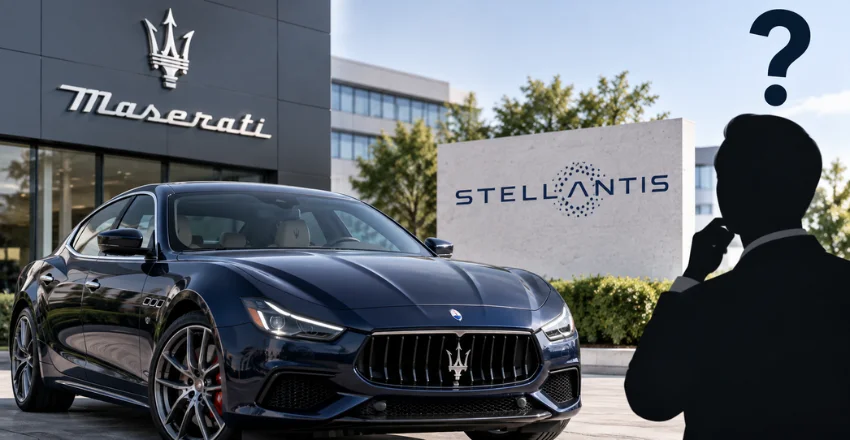
Recent headlines can make the ownership picture look less certain than it is. On September 4, 2026, Reuters reported that Stellantis was discussing a possible industrial partnership involving Maserati, Huawei, and JAC Group as part of efforts to strengthen the luxury business. The report described partnership talks and potential vehicle cooperation, not a completed sale of the Italian marque.
That distinction is important when reading current automotive news. A manufacturing agreement, technology partnership, joint development program, or distribution arrangement does not automatically transfer ownership. As of September 5, 2026, Stellantis’s current corporate materials and the latest reporting do not indicate that another company has bought the brand.
Future corporate decisions can change, particularly as global automakers review costs and product strategies. Readers should therefore check official Stellantis filings or formal company announcements when new ownership rumors appear. Confirmed regulatory filings carry more weight than speculation or social media posts.
What This Ownership Means for U.S. Buyers
A vehicle’s parent company can affect access to investment, technology, parts networks, and long-term product planning. Still, shoppers should evaluate the individual model rather than assume corporate ownership guarantees a particular level of reliability or resale value. Maintenance records, local dealer access, warranty coverage, insurance costs, and repair pricing affect everyday ownership more directly.
This matters especially when shopping for a used Italian luxury vehicle. Age, mileage, service history, electronics, suspension components, and previous repairs can create larger cost differences than the badge’s corporate structure. A specialist pre-purchase inspection is a sensible step before buying an expensive used performance car.
New-car shoppers should also examine the current U.S. lineup rather than relying on older ownership-era assumptions. Official 2026 releases show continued development of models such as the Grecale, GranTurismo, and GranCabrio, including updated powertrains and North American specifications. That ongoing product activity supports the conclusion that the marque remains active within its current corporate parent.
The Bottom Line
Stellantis is the parent company today, completing an ownership story that has included the founding family, the Orsi family, Citroën, De Tomaso, Fiat, Ferrari, and FCA. Understanding that timeline helps separate current corporate control from historical partnerships that still influence how people talk about the brand. It also explains why older online sources may provide answers that were once correct but are now outdated.
For U.S. shoppers, corporate ownership is useful context, not a buying verdict. Focus on the exact model, current specifications, warranty, dealer network, service history, and expected ownership costs before buying. For the latest corporate status, use official filings and current company announcements rather than relying on older ownership pages.
Frequently Asked Questions
Who owns Maserati now?
Stellantis N.V. is the current parent company. The group was created in January 2021 when Fiat Chrysler Automobiles merged with PSA Group. Official 2026 Stellantis materials continue to list the Italian luxury marque in its brand portfolio.
Does Ferrari own Maserati?
No, Ferrari does not own the brand today. Ferrari controlled it from the late 1990s until the company returned to direct Fiat control in 2005. Historical engineering and technical cooperation between the two companies can still cause confusion about their present relationship.
Does Fiat still own the brand?
Not as a standalone parent company in the old sense. Fiat Chrysler Automobiles became part of Stellantis through the 2021 merger with PSA Group. The current ownership answer is therefore Stellantis rather than Fiat or FCA.
Who owns Stellantis?
Stellantis N.V. is a publicly traded company, not a carmaker owned by one individual. Its shares trade publicly, including on the New York Stock Exchange under the STLA ticker. Shareholders therefore own interests in the parent corporation, while individual vehicle marques sit inside its portfolio.
What other car brands does Stellantis own?
Its automotive portfolio includes Alfa Romeo, Chrysler, Citroën, Dodge, DS Automobiles, Fiat, Jeep, Lancia, Opel, Peugeot, Ram, and Vauxhall, among others. Each badge targets different customers and can maintain separate styling, products, and regional identities. Stellantis publishes its current brand portfolio in its corporate reports and on its website.
Is the Trident brand still Italian?
Yes, it remains Italian in origin, headquarters, heritage, design identity, and major manufacturing operations. Its headquarters are in Modena, and recent company releases continue to emphasize Italian engineering and production. A multinational corporate parent does not erase those operational and historical ties.