
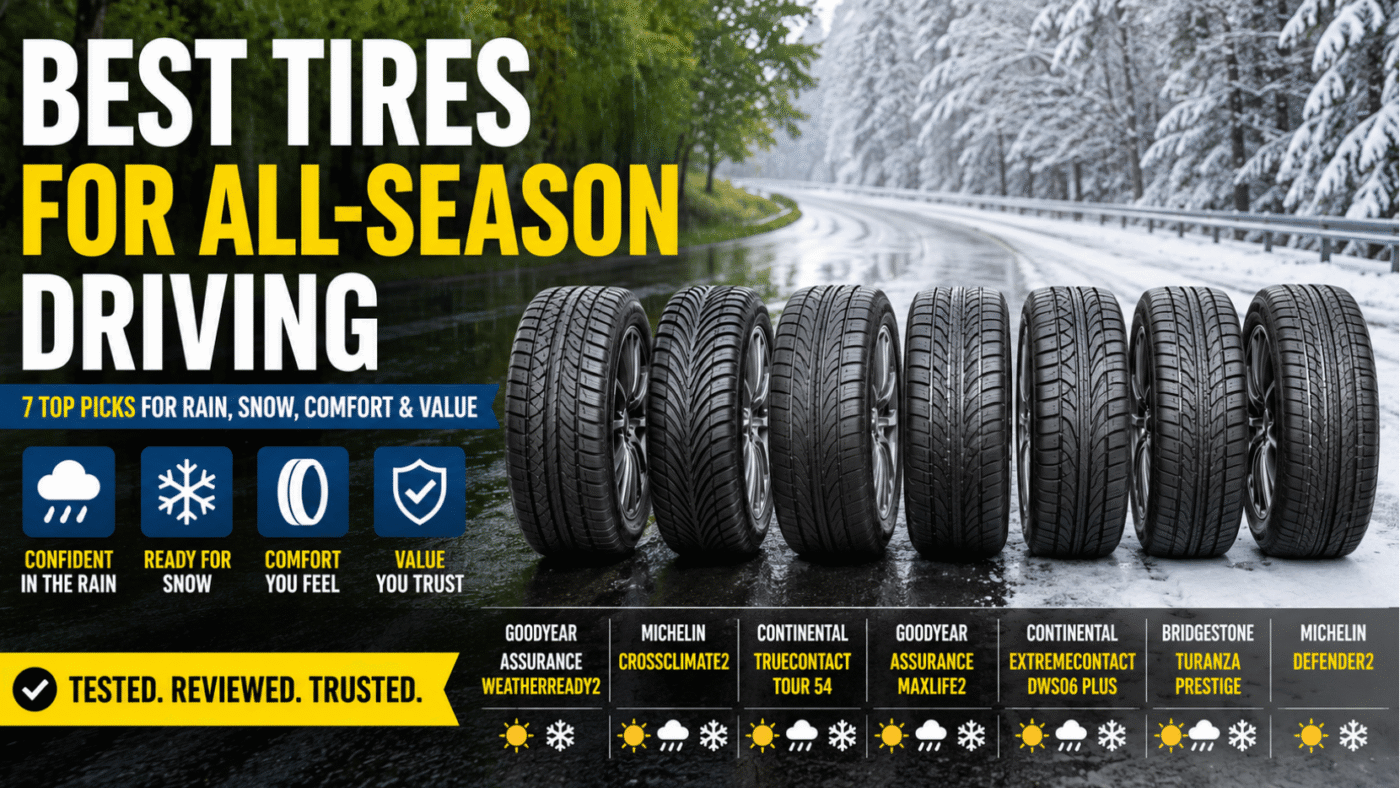
Choosing the best tires for all-season driving means finding the right balance of wet grip, dry handling, ride comfort, tread life, and cold-weather traction. For most drivers, our top starting point is the Goodyear Assurance WeatherReady². Drivers who face regular snow should also consider the Michelin CrossClimate2.
No single tire wins every category. Your climate, vehicle, mileage, and driving style should decide which compromise makes the most sense. Recent Tire Rack testing supports the idea that tire selection should be based on use case rather than brand alone. Its touring test covered wet, dry, road, snow, and ice performance using a Toyota Camry. Tires for All-Season Driving:
| Best Tires for All-Season Driving | Best for | Key strength | Main tradeoff |
| Goodyear Assurance WeatherReady2 | Best overall | Strong balance across changing conditions | Premium positioning |
| Michelin CrossClimate2 | Snow-prone climates | Strong year-round winter capability | Firmer than some touring options |
| Continental True Contact Tour 54 | Everyday commuting | Balanced ride and handling | Wet recovery could be stronger |
| Goodyear Assurance MaxLife 2 | Comfort-focused driving | Plush, predictable road manners | Less grip at the limit |
| Continental Extreme Contact DWS06 Plus | Sporty cars | Responsive wet and dry performance | More performance than many commuters need |
| Bridgestone Toranzo Prestige | Touring cars | Steering feel and usable snow traction | Noise and comfort could improve |
| Michelin Defender 2 | Mild climates | Comfort and responsive steering | Wet and winter traction trails are stronger choices |
7 Top Picks: Best Tires for All-Season Driving

1. Goodyear Assurance WeatherReady2 — Best Overall
Tire Rack’s November 2025 test, updated with winter 2026 results, described it as comfortable and composed across wet, dry, and winter conditions. It earned the highest overall score among the seven touring models in that test at 7.57/10. Performance matters more than winning one isolated test. A daily driver needs predictable braking in rain, stable highway behavior, useful cold-weather traction, and acceptable comfort.
Pros
- Balanced performance across several conditions
- Comfortable road manners
- Good choice for drivers who see changing weather
- Strong showing in recent independent testing
Cons
- Drivers in mild climates may not need the winter emphasis
- Performance-focused cars may benefit from a sportier design
Verdict: Start here when you want one versatile set and don’t have a specialized performance requirement.
2. Michelin CrossClimate2 — Best for Drivers Who See Snow
The Michelin CrossClimate2 remains a strong choice where winter weather matters.
Autoblog named it its best overall all-season choice in July 2026, citing dry and wet grip, snow capability, long tread life, and a quiet ride. The tire also carries the three-peak mountain snowflake marking, which distinguishes its winter capability from basic all-season designs. Is it appealing for drivers who face occasional snow but don’t want seasonal tire changes?
Pros
- Strong wet, dry, and cold-weather versatility
- Three-peak mountain, snowflake-rated
- Good fit for regions with unpredictable winters
Cons
- Premium price range
- A ride can feel firmer than a comfort-first touring tire
Verdict: Choose it when snow capability carries more weight in your buying decision.
3. Continental TrueContact Tour 54 — Best Everyday Touring Choice
The Continental TrueContact Tour 54 suits drivers who spend most of their time commuting, running errands, and taking highway trips.
In Tire Rack’s latest touring comparison, it earned a 7.27/10 total rating. Testers praised sharp steering, a composed street ride, and controllable winter behavior. They wanted quicker recovery on wet surfaces. file makes it easy to recommend a sedan or family vehicle where predictable behavior matters more than sporty limits.
Pros
- Composed ride
- Direct steering response
- Useful winter performance
- A few major weaknesses
Cons
- Wet-limit behavior trails the strongest options
- Not designed as an aggressive performance tire
Verdict: A sensible pick for commuters who value balance rather than specialization.
4. Goodyear Assurance MaxLife2 — Best for Comfort
Drivers who care about smooth highway miles should put the Goodyear Assurance MaxLife2 on the shortlist. Tire Rack gave it a 7.39/10 overall rating in its recent touring test. The testers highlighted its plush ride, balanced steering, and predictable behavior. Wet and winter grip were considered solid, though there was room for more traction. Is it well-suited to daily commuting and long trips where ride quality matters?
Pros
- Comfortable ride
- Predictable steering
- Calm everyday behavior
- Strong score in recent touring testing
Cons
- Doesn’t lead the group for wet or winter grip
- Enthusiasts may want sharper responses
Verdict: Pick it when comfort and easy road manners rank above maximum grip.
5. Continental ExtremeContact DWS06 Plus — Best for Sporty Driving
A performance car needs a different tire from a commuter sedan. The Continental ExtremeContact DWS06 Plus targets drivers who want stronger steering response and grip without moving to a dedicated summer setup. Tire Rack also lists it among popular modern performance all-season options, alongside the Michelin Pilot Sport All Season 4 and Pirelli P Zero AS Plus 3.
- Performance-focused handling
- Strong wet and dry capability
- Better fit for sporty vehicles
Cons
- More performance than many commuters require
- Winter conditions remain a compromise compared with dedicated winter rubber
Verdict: Choose it for a sports sedan, coupe, or performance-oriented daily driver.
6. Bridgestone Turanza Prestige — Best for Steering Feel
The Bridgestone Turanza Prestige blends touring priorities with responsive steering.
Tire Rack praised its handling in wet conditions and its road behavior. It also provided usable snow traction in the winter update. Its 6.96/10 total score placed it below the WeatherReady2 and MaxLife2, while testers noted room to improve comfort and noise control.
- Nicely weighted steering
- Useful wet-weather ability
- Capable snow traction
Cons
- Noise control could improve
- Ride refinement isn’t class-leading
Verdict: Consider it when steering feels more than having the softest ride.
Michelin Defender2—Best for Mild-Climate Touring
The Defender2 makes more sense when comfort and everyday response matter more than winter capability. In Tire Rack’s current touring comparison, drivers liked its reactive steering and road comfort. Wet and winter traction were the areas testers most wanted improved. Distinction matters. A driver in a warm region has different priorities from someone commuting through freezing temperatures and snow.
Pros
- Pleasant road comfort
- Responsive steering
- Well-suited to conventional daily driving
Cons
- Better alternatives exist for winter traction
- Wet performance wasn’t a strength in the recent comparison
Verdict: Best considered for milder climates rather than areas with frequent winter weather.
All-Season vs. All-Weather vs. Winter Tires
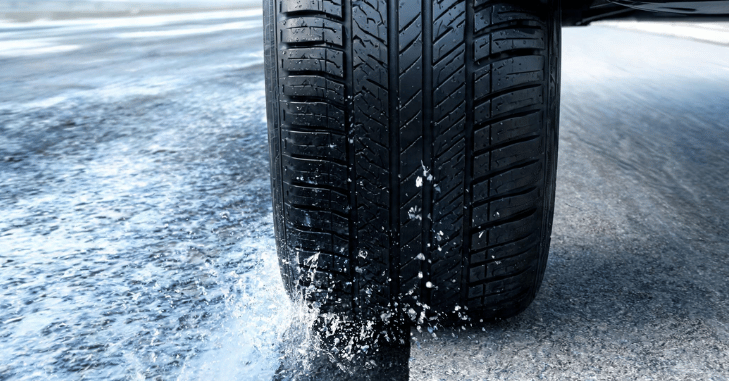
The labels can be confusing. Traditional all-season designs aim to balance warm-weather performance, wet traction, comfort, and some cold-weather ability. All-weather models push further toward winter use and often carry the three-peak mountain snowflake symbol.
Dedicated winter tires remain the specialist choice for severe snow, ice, and sustained cold conditions. Tire Rack’s 2026 testing directly compared all-weather products with dedicated winter designs, reinforcing that one-tire convenience still involves tradeoffs. A tire with good light-snow performance should not automatically be treated as a substitute for winter tires in harsh conditions.
How to Choose the Right Set for Your Car
Start with your vehicle’s required tire size, load rating, and speed rating. Then match the tire category to how you drive.
Focus on these five questions:
- How often do you drive in heavy rain?
- Do you see light snow or prolonged winter conditions?
- Is comfort more important than sharp handling?
- Do you drive a sedan, SUV, truck, or performance car?
- Are most of your miles local, highway, or spirited driving?
Drivers shopping for an efficient crossover can also compare Autovyra’s Best MPG SUV for 2026. Weight, powertrain, and driving habits all affect real-world efficiency. SUV and truck owners should confirm that the chosen model and size meet the vehicle’s load requirements. Autovyra’s GMC vs. Chevy comparison provides more context for shoppers comparing popular truck and SUV families.
After installation, pressure checks and routine inspections matter. Owners who handle maintenance at home can use Autovyra’s car ramps‘ safety-guided DIY guidance.
Which Tire Should You Buy?

For an average daily driver facing a mix of sun, rain, cold, and occasional snow, Goodyear Assurance WeatherReady2 is our first choice based on its balanced showing in recent testing, and the Michelin CrossClimate2 when winter capability is the priority. Choose the Continental TrueContact Tour 54 for a balanced commuter setup or the Assurance MaxLife2 when ride comfort matters most.
Drivers with performance cars should look toward the Continental ExtremeContact DWS06 Plus category instead of buying a comfort-first touring design. The key is not finding a tire that wins every test. It’s choosing the one whose strengths line up with the roads you drive.
Conclusion
Finding the Best Tires for All-Season Driving comes down to matching the tire to your climate, vehicle, and daily driving habits rather than choosing the most expensive option. The Goodyear Assurance WeatherReady2 stands out as the best overall choice for balanced year-round performance, while the Michelin CrossClimate2 is ideal for drivers who regularly encounter snow. Commuters may prefer the Continental TrueContact Tour 54 or Goodyear Assurance MaxLife2, and performance enthusiasts will appreciate the Continental ExtremeContact DWS06 Plus.
FAQs
For most daily drivers, the Goodyear Assurance WeatherReady2 is a strong starting point because recent Tire Rack testing found it balanced across wet, dry, road, and winter conditions. The Michelin CrossClimate2 is especially compelling where snow performance matters.
Good models are designed for wet roads, but their braking and hydroplaning performance differ. Use independent wet testing rather than assuming every tire labeled all-season offers equal rain performance.
Neither category is automatically better. All-weather designs make sense when you need stronger winter capability from one set. Traditional touring designs can favor comfort, tread life, quietness, or warm-weather road manners.
Service life depends on the model, vehicle, alignment, pressure, rotation schedule, road surface, and driving style. Check the specific manufacturer’s warranty and inspect tread condition rather than relying on a universal mileage figure.
Matching four tires usually gives the most consistent handling and traction. Replacement requirements can vary by drivetrain, especially on all-wheel-drive vehicles, so follow the vehicle and tire manufacturer’s specifications before mixing tread depths or models.